


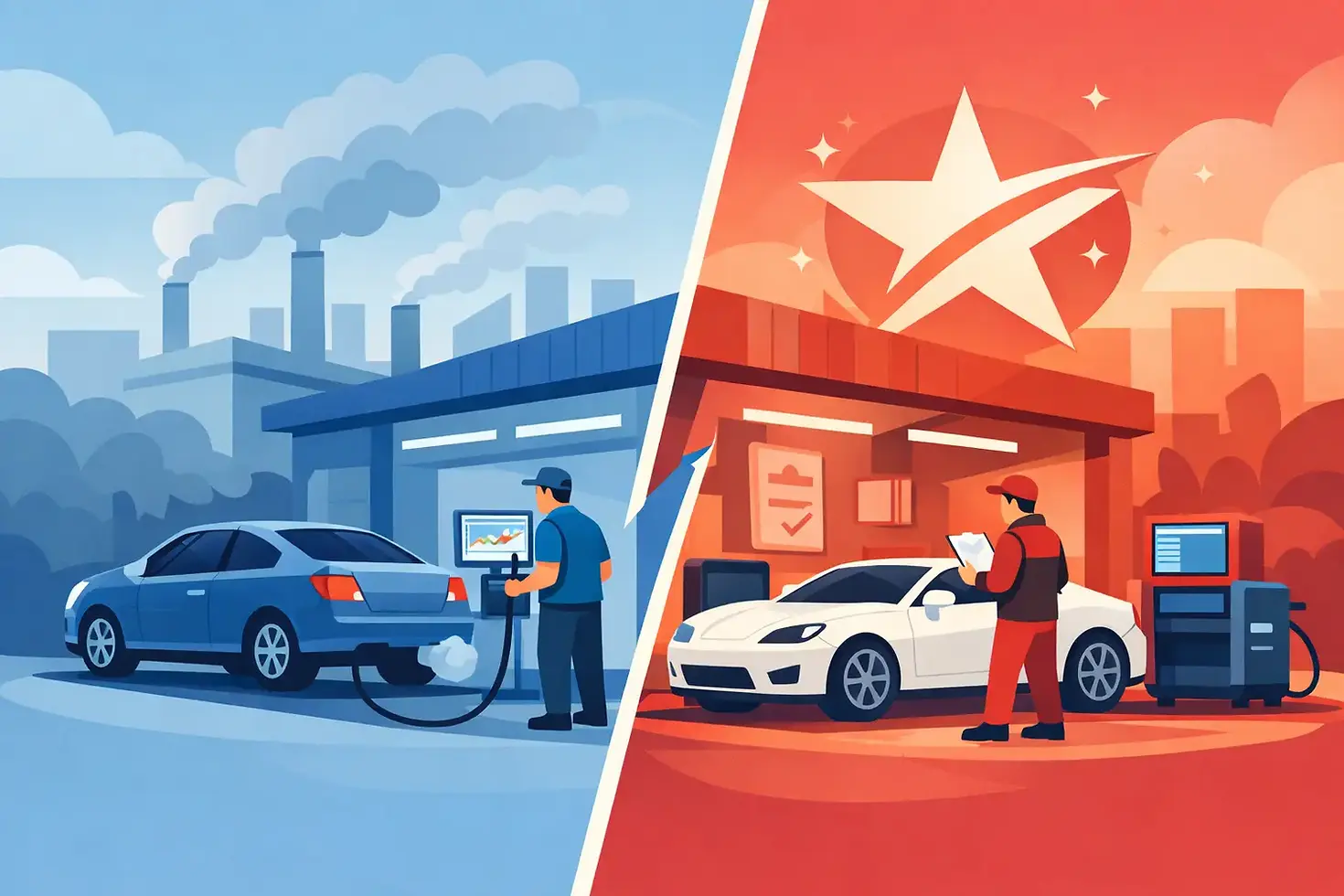
Smog Check Versus STAR Station
A lot of California drivers only hear about STAR when a DMV notice shows up and adds one more question to an already routine task. If you are trying to sort out smog check versus STAR station, the short answer is this: a smog check is the inspection your vehicle needs, while a STAR station is a smog station that meets higher state performance standards and can inspect vehicles directed there by the DMV.
That distinction matters because choosing the wrong station can waste time. If your registration notice says your vehicle must go to a STAR station, a regular smog station cannot complete the requirement, even if it performs standard smog checks every day.
Smog check versus STAR station: the basic difference
A smog check is the service. It is the emissions inspection required by California for many vehicles during registration renewal, title transfer, and certain other situations. The purpose is to confirm that a vehicle meets state emissions rules.
A STAR station is a type of licensed smog check station. It is authorized under the Bureau of Automotive Repair's STAR program and must meet specific performance measures set by the state. In practical terms, that means a STAR station can handle vehicles that are specifically flagged by the DMV as needing a STAR inspection.
So this is not really an either-or choice between two unrelated services. One is the inspection itself, and the other is a particular category of station qualified to perform that inspection for certain vehicles.
Why some vehicles are sent to a STAR station
Not every vehicle owner in California needs a STAR station. Many drivers can use any licensed smog check station that is allowed to test their vehicle type. But some registration notices state that the vehicle must be inspected at a STAR station.
The state uses that requirement as part of its emissions oversight process. A vehicle might be directed to STAR for a number of reasons tied to registration history, emissions profile, model year patterns, or other state criteria. From the driver side, the reason often matters less than the instruction itself. If the DMV notice says STAR, then STAR is what you need.
This is where confusion starts. Drivers may assume all smog stations are interchangeable. They are not. A station can be fully licensed for smog inspections and still not be a STAR station. If you overlook that detail, you may leave without a valid certificate for your renewal.
What a regular smog check station does
A standard licensed smog check station inspects eligible vehicles under California rules. For many motorists, that is all that is needed. If your DMV paperwork does not mention STAR, a regular station may be enough.
That said, not every station handles every vehicle category. Some stations may have limits based on equipment, licensing scope, or whether they are set up for larger vehicles, test-only inspections, or certain emissions cases. That is why it helps to confirm the station can inspect your vehicle before you drive over, especially if you have an SUV, pickup, van, RV, or a vehicle with a more complicated smog history.
What makes a STAR station different
A STAR station is still performing a smog check, but it is doing so under additional state program standards. These stations are monitored for inspection performance and are approved to inspect vehicles the state has designated for STAR testing.
For the customer, the biggest difference is not the inspection steps you see from the waiting area. The biggest difference is whether the certificate will satisfy DMV requirements for your vehicle. If your notice requires STAR, then the station's STAR status is not a nice extra. It is the requirement.
Some STAR stations are test-only centers, and some are not. That can affect the customer experience. A test-only center is focused on inspection and certification rather than repair work. Many drivers prefer that arrangement because the role is straightforward - inspect the vehicle, report the results, and issue certification when the vehicle passes.
How to know whether you need STAR
The easiest way is to read your DMV registration renewal notice carefully. If it says a STAR station is required, follow that instruction. If it does not, then a standard licensed smog station may be acceptable.
If the wording is unclear, call the station before your visit and ask whether your vehicle needs a STAR inspection and whether the station is authorized to perform it. That quick check can save you a second trip.
This is especially useful for people dealing with title transfers, older vehicles, gross polluter history, or commercial and fleet units. In those cases, assumptions can slow things down.
Smog check versus STAR station for East Bay drivers
For drivers in Oakland, Berkeley, San Ramon, Danville, El Cerrito, and Albany, the issue is often less about understanding the program in theory and more about getting the right inspection done without losing half a day. Most people want three things: a licensed station, a valid certificate, and a fast visit.
That is why the station type matters. If your notice calls for STAR, going to the nearest non-STAR location is not convenient if you have to repeat the process somewhere else. If your vehicle is larger, older, or falls into a special category, it also helps to choose a center that regularly handles a broad range of vehicles.
Time 4 Smog Check operates official test-only smog check centers and serves a wide mix of vehicle types, which is the kind of practical fit many local drivers are looking for when the job is simply to get certified correctly and move on.
Common mistakes people make
One common mistake is treating all smog stations as identical. They are not. Licensing, STAR status, and vehicle coverage can vary.
Another mistake is assuming a lower advertised price tells the whole story. Price matters, but so does getting the correct inspection the first time. A cheap visit to the wrong station is not actually cheaper if it leads to delays, another fee, or missed registration timing.
A third issue is waiting until the last minute. If registration is due soon and your vehicle needs STAR, any misunderstanding becomes more stressful. Leaving a little time to verify the station type, hours, and vehicle eligibility makes the process easier.
Which one should you choose?
If your DMV paperwork requires STAR, the answer is simple: choose a STAR station.
If it does not require STAR, then the right choice depends on convenience, vehicle type, and the kind of station you prefer. Some drivers like a test-only center because the process is direct and focused. Others just want the closest licensed station that can handle their car or truck.
For fleets, dealerships, and organizations managing multiple vehicles, consistency matters too. Working with a station that understands compliance requirements across different vehicle classes can reduce scheduling problems and paperwork issues.
What to ask before you go
Before heading out, ask whether the station is licensed for your vehicle, whether STAR service is available if needed, and whether it handles the category you drive. This matters for RVs, vans, pickups, SUVs, and other vehicles that not every location is prepared to test.
It is also reasonable to ask about expected wait time, operating hours, and whether any discount or coupon applies. Smog service is a required task, so clear answers and predictable service go a long way.
The practical takeaway on smog check versus STAR station
The cleanest way to think about smog check versus STAR station is this: the smog check is the inspection you need, and the STAR station is the specific type of licensed facility some vehicles are required to use. If your DMV notice says STAR, do not treat that as optional. If it does not, focus on finding a licensed station that can inspect your vehicle promptly and correctly.
A smog appointment should not feel complicated. Most problems come from choosing a station before confirming what your registration notice actually requires. A few minutes of checking now usually means a faster visit, the right certificate, and one less thing hanging over your to-do list.


Comments